
Kansas City Generator Installers
Proudly Serving Johnson County, Miami County, and Beyond

Serving Kansas City from our locations in Louisburg, KS and Overland Park, KS since 2000
Our Generator Services in Kansas City
Power outages can interrupt your heating and cooling, spoil refrigerated food, disable sump pumps, and leave important medical or security equipment without electricity. Lancaster Brothers provides professional generator services in Kansas City to help homeowners prepare for severe weather, utility failures, and other unexpected disruptions.
Generator Installation
Lancaster Brothers provides full installation for permanent home standby generators, including placement, electrical connections, and automatic transfer switch setup. Once installed, the system is configured to start automatically during a power outage and immediately supply power to selected circuits or the entire home. Once utility power returns, the generator seamlessly transfers back to standby mode without any manual intervention.
Generator Replacement
A generator replacement might be necessary if your system requires constant repairs, shows corrosion or engine wear, relies on outdated controls, or no longer meets your home’s electrical demands. We evaluate the condition and performance of your existing unit to determine whether replacement is the most practical and cost-effective option, and help you choose a properly sized, upgraded system.
Generator Repair
A standby generator has to be ready to operate even after long periods of inactivity. Issues like warning lights, failed exercise cycles, battery failure, fluid leaks, unusual noises, error codes, or delayed startup can all indicate the need for professional generator repairs. Lancaster Brothers provides generator diagnostics and repair services to identify the issue and ensure reliable performance before the next outage.
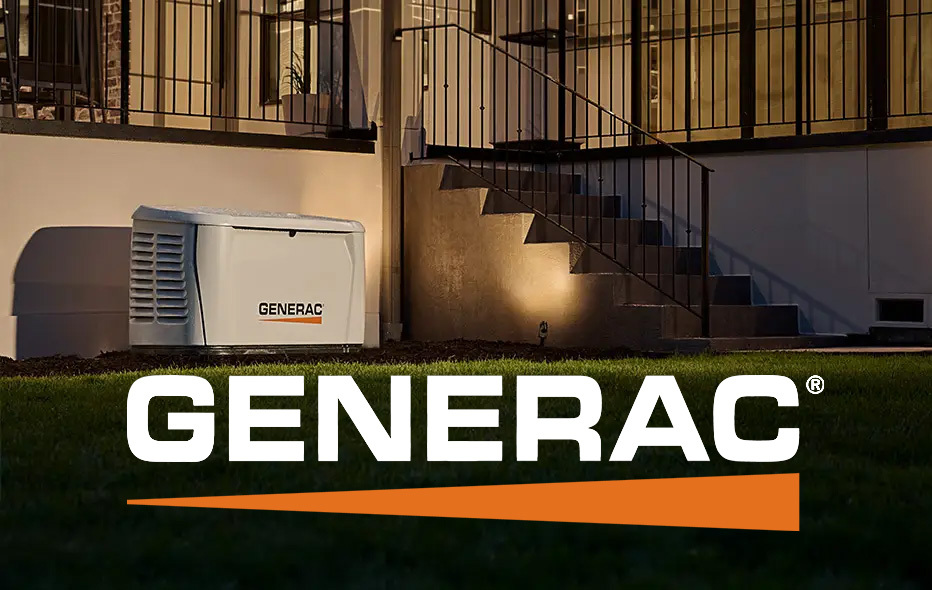
Generac Generator Installation & Repair in Kansas City
Lancaster Brothers installs and services Generac home standby generators for Kansas City-area homeowners and businesses, specializing in the full line of Generac Guardian Series systems. Their permanently installed units are engineered for automatic operation and typically range from 10kW to 26kW for residential applications, with popular models like Generac Guardian 22kW and 24kW designed to support whole-home backup power during extended outages. Generac offers scalable solutions ranging from smaller 10-14kW units for essential circuit coverage, to larger 18-26kW models capable of supporting central air conditioning systems, electric water heaters, and high-demand appliances simultaneously.
Qualifying Generac generator installations from Lancaster Brothers include Generac Mobile Link™ remote monitoring at no additional cost when customer-provided Wi-Fi is available. It allows both homeowners and service technicians to identify issues like low battery voltage, exercise cycle failures, or diagnostic fault codes before a power outage occurs, improving long-term system reliability and readiness.
Types of Backup Generators
Backup generator can describe several different types of power equipment. Some are permanently connected to a home, while others must be moved outdoors, started manually, and connected to individual appliances or an approved transfer switch. The right option depends on how much power you need, how long you need the system to operate, and if you’re looking for partial or whole-home coverage.
Home Standby Generators
A home standby generator is permanently installed outside the house and connected to the electrical system through a transfer switch. It typically operates on natural gas or liquid propane and starts automatically when utility service fails. Standby systems are generally the strongest choice for homeowners who want automatic, extended backup power for major equipment like HVAC systems, refrigerators, sump pumps, lighting, and security devices.
Inverter Generators
Inverter generators are compact portable units that produce stable electricity suitable for sensitive electronics. They are generally quieter and more fuel-efficient than conventional portable generators, especially when operating below their full capacity. Their lower output makes them better suited to phones, computers, lights, televisions, and a limited number of smaller appliances.
Portable Generators
Portable generators provide temporary power through gasoline, propane, or another supported fuel source. Depending on the unit’s capacity, they may operate several appliances directly or supply selected household circuits through a professionally installed manual transfer switch. They require manual setup, outdoor operation, refueling, and proper cord or transfer-equipment connections. A portable generator should never be connected directly to a home’s wiring without approved transfer equipment.
Solar Generators
A solar generator is a portable battery powered station that can be recharged using compatible solar panels. They operate without a gasoline engine, produce no exhaust during use, and can provide quiet power for electronics, communication devices, lights, and certain small appliances. Battery capacity and available solar charging conditions limit their runtime and output.
What Kind Of Generator Do I Need For My Home?
Start by deciding what has to stay operational during an outage. Some households only need refrigeration, lighting, communication devices, and a few outlets. Others need enough capacity to support central heating or cooling, sump or well pumps, medical equipment, cooking appliances, and nearly every circuit in the home.
Generator
Avg. Power Output
Typical Load Coverage
Whole-Home
10 to 28 kW
Selected essential circuits or major household systems
Inverter
2 to 5 kW
Electronics, lights, refrigerator, and limited temporary loads
Portable
3.5 to 17.5 kW
Multiple appliances or selected household circuits
Solar
1 to 2 kW
Electronics, lights, communication devices